
iPhone Camera Settings Guide
iPhone 15 Pro Max Camera Settings
Seven quick steps to photos and video that look like they came from a real camera. Each one shows the exact screen to match.
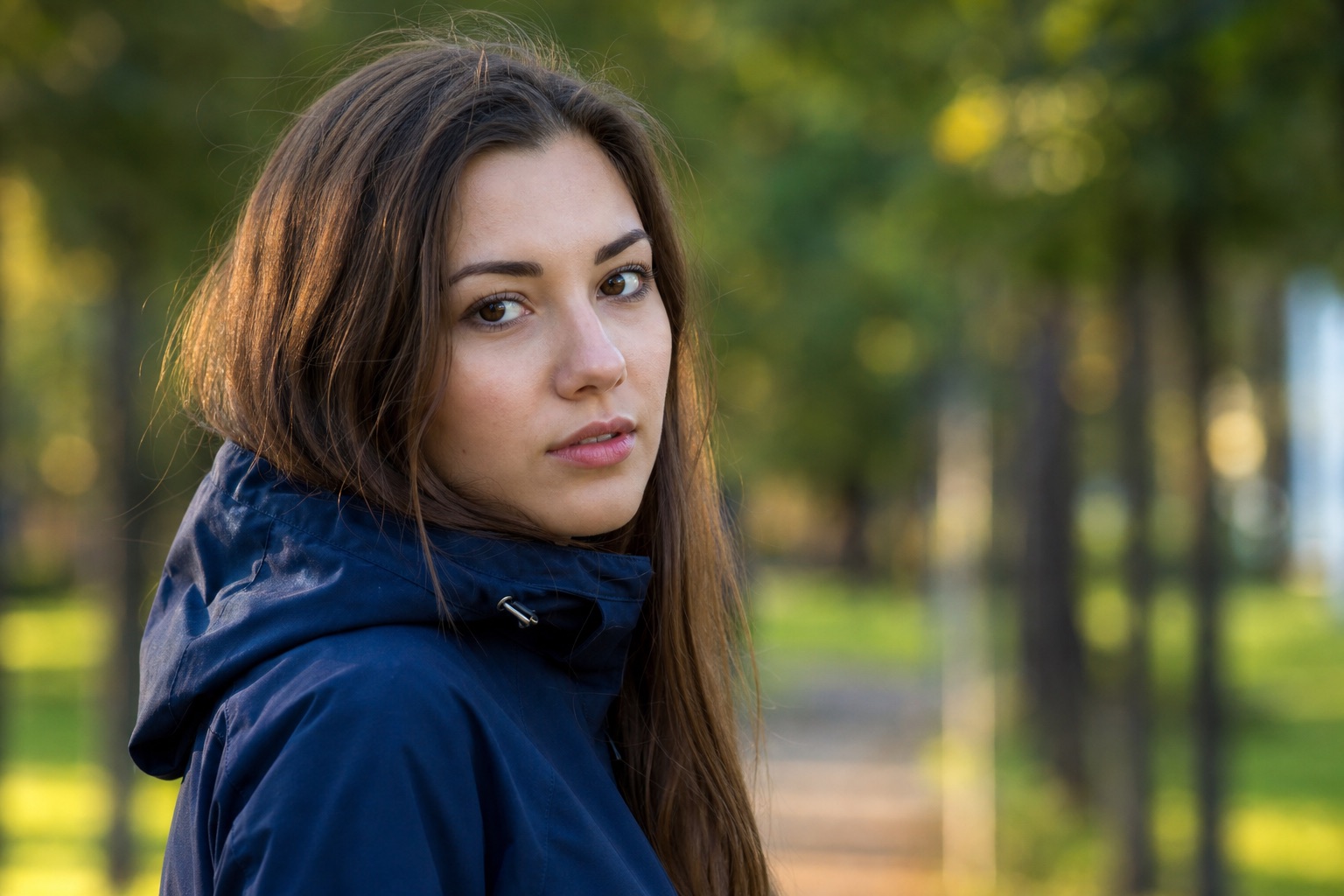 .5
1×
2
5
.5
1×
2
5
Video Photo Portrait
Where you'll end up
- RAW 48 on the top row
- Exposure at −0.7
- Grid and Level on
- 1× as your default lens
Seven steps. One setup.
The settings that shape every photo and video, in the order to change them. Each step explains what it does and why it matters.
- FormatsProRAW on, 24 MP every day
- Preserve SettingsMake the camera remember your setup
- CompositionGrid, Level, and a 24 and 35 mm pair
- In the viewfinderRAW 48, −0.7, and the 1× lens
- Video4K 60 for social, 4K 24 for film
- The lookExposure and grading, side by side
- The lensesFour zoom stops, from 13 to 120 mm
Step 01
Small files every day. RAW when it counts.
Settings Camera Formats
These rows set the quality ceiling for every photo and clip you take.
- Camera Capture
- High Efficiency
- HEIF and HEVC. Required for 4K 60 fps, and Dolby Vision.
- Photo Mode
- 24 MP
- The everyday default. It draws on all 48 MP and keeps files small.
- ProRAW & Resolution Control
- On
- Adds RAW 48 to the Camera app, for anything you plan to edit or crop.
- Pro Default
- ProRAW Max
- Full 48 MP RAW when you switch it on in the Camera app. Files run about 75 MB, so save it for shots you'll edit.
- ProRes Encoding
- Log
- Turn on Apple ProRes first. This only affects ProRes clips, so everyday HEVC video stays HDR.
Camera capture
- High Efficiency
- Most Compatible
Photo capture
- Photo Mode
- 24 MP
- ProRAW & Resolution Control
- On
- Pro Default
- ProRAW Max
Video capture
- Apple ProRes
- On
- ProRes Encoding
- Log
High Efficiency is required for 4K at 60 fps and Dolby Vision HDR.
- ProRAW Max 48 MP DNG
- ~75 MB
- ProRAW 12 MP DNG
- ~25 MB
- HEIF 24 MP photo mode, recommended
- ~2 MB
Step 02
Make the camera remember.
Settings Camera Preserve Settings
Out of the box, Camera forgets most changes once you leave it. These switches keep your setup in place.
- Camera Mode
- On
- Reopens in whatever mode you used last, photo or video.
- Exposure Adjustment
- On
- Your −0.7 bias is still there the next time you open Camera.
- Photographic Style and Action Mode
- Off
- Both are situational, so start clean each time.
- Camera Mode
- On
- Photographic Style
- Off
- Creative Controls
- On
- Depth Control
- On
- Macro Control
- On
- Exposure Adjustment
- On
- Night Mode
- On
- Portrait Mode
- On
- Action Mode
- Off
- ProRAW & Resolution Control
- On
- Apple ProRes
- On
- Live Photo
- On
Exposure Adjustment keeps your −0.7 between sessions.
Step 03
Frame it before you tap.
Settings Camera
Composition aids, the lens defaults, and a few switches that decide how each photo is processed.
- Grid and Level
- On
- The grid divides the frame into thirds, and the level turns yellow when the horizon is straight.
- View Outside the Frame
- Off
- Shows only what you'll capture, without the wider camera's preview around it.
- Main Camera
- 24 + 35 mm
- Keep 24 mm as the default and 35 mm one tap away. Turn 28 mm off.
- Prioritize Faster Shooting
- Off
- Every frame gets full processing. Turn it on for sports and kids.
- Lens Correction
- On
- Straightens Ultra Wide edges. Turn it off only if you want the uncropped frame.
Composition
- Grid
- On
- Level
- On
- Mirror Front Camera
- Off
- View Outside the Frame
- Off
Photo capture
- Main Camera
- 24 mm
- Portraits in Photo Mode
- On
- Prioritize Faster Shooting
- Off
- Lens Correction
- On
- Macro Control
- On
Step 04
Take control in the viewfinder.
Camera app
A few habits in the Camera app matter more than any setting.
- Format
- RAW 48
- For anything you'll edit, crop, or print. HEIF at 24 MP covers the rest.
- Exposure
- −0.7
- iPhones meter bright. Pulling back keeps skies and deepens blacks. In hard light, hold on the subject until AE/AF Lock appears, then drag down up to two stops.
- Lens
- 1×
- The main camera has the biggest sensor. Save 5× for good light.
- Action button
- Camera
- Set it in Settings, Action Button. Press and hold to open Camera from any screen, even when locked.
Exposure
Video Photo Portrait
Step 05
4K 60 for social. 4K 24 for film.
Settings Camera Record Video
Frame rate sets the feel. The switches below keep exposure and color steady from one shot to the next.
- Record Video
- 4K at 60 fps
- Smooth, sharp motion for everyday clips and social. Switch to 4K at 24 fps when it should feel like a film.
- HDR Video
- On
- Records Dolby Vision HDR, with brighter highlights and richer color on modern screens.
- Lock White Balance
- On
- Color stays put as you move from shot to shot.
- Auto FPS
- Off
- Keeps the frame rate you chose, even in low light.
- Record Stereo Sound
- On
- Records left and right channels from the built-in mics.
- 4K at 24 fps
- 4K at 30 fps
- 4K at 60 fps
While recording
- Enhanced Stabilization
- On
- Action Mode Lower Light
- Off
- HDR Video
- On
- Auto FPS
- Off
- Lock Camera
- Off
- Lock White Balance
- On
Enhanced Stabilization crops in slightly for steadier handheld footage.
-
24 fps at 1/50 s
A little motion blur in every frame. Movement reads as film.
-
60 fps at 1/120 s
Crisper frames and smooth motion. Right for social.
-
24 fps at 1/2000 s
Typical of auto exposure in bright sun. Each frame is frozen, so motion stutters.
Step 06
See the difference.
Two of the changes above, side by side. Both frames come from the same photo and are simulated, so the setting is the only variable.
Exposure −0.7 holds the highlights and deepens the blacks.
A light grade: a little more contrast, a little less saturation.
- Photographic Styles
- Standard
- Styles don't change a ProRAW file, so edit instead. If you never edit, customize a style and leave it on.
- Editing
- Preset first
- Start from a preset, then adjust only exposure, highlights, shadows, and temperature.
Step 07
Four zoom stops, from 13 to 120 mm.
A 48 MP main camera, a 12 MP Ultra Wide, a 12 MP 5× telephoto, and a 2× crop. The main camera has the biggest sensor, which is why 1× is home.
- .5× 13 mm Ultra Wide, ƒ/2.2
- 1× 24 mm Main, ƒ/1.78
- 2× 48 mm Crop of Main, 12 MP
- 5× 120 mm Telephoto, ƒ/2.8
- 48MP Main
- 24 mm, with a 2× 48 mm crop
- ƒ/1.78
- Second-generation sensor-shift OIS
- 12MP Ultra Wide
- 13 mm, and macro
- ƒ/2.2
- 12MP 5× Telephoto
- 120 mm
- ƒ/2.8
- 3D sensor-shift OIS
iPhone 15 Pro Max vs 14 Pro Max
The generational leap from Lightning to USB-C, 3× to 5×, and the arrival of Apple Log
Presets and Storage
Which format to use for each kind of clip, and how much of it fits.
Video presets
| Use Case | Resolution | FPS | Codec | Format |
|---|---|---|---|---|
| Social Media Best | 4K | 30 | HEVC | Dolby Vision HDR |
| Film / Cinematic | 4K | 24 | ProRes | Apple Log |
| Documentary | 4K | 30 | ProRes | ProRes HQ |
| Slow Motion | 4K | 60 | HEVC | Dolby Vision |
| Cinematic Mode | 4K | 30 | HEVC | Dolby Vision HDR |
| Spatial Video | 1080p | 30 | MV-HEVC | Spatial (Apple Vision Pro) |
What a minute of 4K costs
- ProRes 422 HQ 4K at 30 fps, for grading
- ~6 GB
- HEVC 4K at 60 fps, for social
- ~440 MB
- HEVC 4K at 30 fps
- ~190 MB
How much fits
| Format | 256 GB | 512 GB | 1 TB |
|---|---|---|---|
| HEVC 4K at 60 fps | ~9.1 hr | ~18 hr | ~37 hr |
| ProRes 4K at 30 fps | ~40 min | ~80 min | ~2.7 hr |
Frequently Asked Questions
Best settings, key features, and what changed from the 14 Pro Max.
What are the best camera settings for iPhone 15 Pro Max?
In Settings, Camera: High Efficiency, Photo Mode at 24 MP, ProRAW and Resolution Control on with ProRAW Max as the Pro Default, Grid and Level on, and View Outside the Frame off. In the Camera app, shoot RAW 48 for photos you will edit and set exposure to about −0.7. For video, record 4K at 60 fps for social or 4K at 24 fps for a film look, with Lock White Balance on.
Is the iPhone 15 Pro Max the first iPhone with 5x telephoto?
Yes. The iPhone 15 Pro Max introduced the 5× tetraprism telephoto — the first periscope-style zoom lens on an iPhone. It reaches 120mm at ƒ/2.8, compared to the 3× (77mm) telephoto on the 15 Pro and all previous Pro models. The tetraprism design bounces light four times inside the module to achieve the longer focal length without making the phone thicker.
Can iPhone 15 Pro Max shoot 4K at 120fps?
No. The iPhone 15 Pro Max maxes out at 4K 60fps for standard video recording. 4K 120fps was introduced the following year with the iPhone 16 Pro and 16 Pro Max. For slow motion, the 15 Pro Max can record 1080p at 240fps, or you can use 4K 60fps and play it back at 30fps for a 2× slowdown.
Does iPhone 15 Pro Max support Apple Log?
Yes. Apple Log debuted on the iPhone 15 Pro and 15 Pro Max. It's a flat, log-encoded video profile that captures up to 17 stops of dynamic range for professional color grading. Apple Log requires shooting in ProRes format and produces footage that looks desaturated until you apply a color grade in software like DaVinci Resolve, Final Cut Pro, or Premiere Pro.
What is Spatial Video on iPhone 15 Pro Max?
Spatial Video is a stereoscopic 3D video format that uses the Main and Ultra Wide cameras simultaneously to capture depth information. It records at 1080p 30fps in MV-HEVC format. The resulting clips can be viewed on Apple Vision Pro with a convincing three-dimensional effect. Hold the phone in landscape orientation and shoot at 1–3 meters from your subject for the best results.