Zodiacal light, gegenschein, and zodiacal band visible. Scorpius and Sagittarius regions cast shadows. Airglow is visible.
Star Trail Calculator
Calculate maximum exposure time before stars trail using NPF Rule, 500 Rule, and more
NPF Rule
Most accurate method. Accounts for sensor resolution and aperture.
(35 × A + 30 × P) ÷ F
500 Rule
Classic rule. Often produces slight trailing on modern sensors.
500 ÷ (F × crop)
300 Rule
Conservative. Safer for high-resolution sensors and pixel peeping.
300 ÷ (F × crop)
Quick Comparison
Moon Phase Calendar
Plan shoots around the lunar cycle — new moon is ideal for deep sky imaging
Shooting Recommendations by Phase
| Phase | Illumination | Deep Sky | Best For |
|---|---|---|---|
| New Moon | 0–5% | Excellent | Milky Way, nebulae, faint DSOs. Darkest skies. |
| Crescent | 5–35% | Good | Deep sky when moon is below horizon. |
| Quarter | 35–65% | Limited | Plan around moonrise/set times. |
| Gibbous | 65–95% | Poor | Star trails, moonlit landscapes. |
| Full Moon | 95–100% | Avoid | Lunar photography, moonlit scenes only. |
Milky Way Season
Galactic core visibility by month and hemisphere
Galactic Core Planning Tips
Best Conditions
- New moon or moon below horizon
- Bortle class 4 or darker skies
- Clear, low-humidity nights
- Core at least 20° above horizon
Timing Strategy
- Check astronomical twilight end time
- Core rises ~4 minutes earlier each night
- Peak season: Core transits at midnight
- Plan for 2+ hours of shooting time
Meteor Shower Calendar
Major annual meteor showers with peak dates and expected rates
| Shower | Peak Date | ZHR | Speed | Moon | Conditions | Radiant |
|---|
Light Pollution Scale
The Bortle Dark-Sky Scale for evaluating observation sites
Airglow may be faintly visible near horizon. M33 visible with direct vision. Summer Milky Way highly structured.
Light pollution domes visible on horizon. Clouds illuminated near horizon. Milky Way appears complex.
Light pollution domes obvious. Milky Way visible but lacking detail. M31 visible to naked eye.
Milky Way washed out at horizon. Clouds clearly illuminated. Only hints of zodiacal light on best nights.
Milky Way only visible at zenith. Sky background appears grayish-white. M31 barely visible.
Entire sky has vague grayish-white hue. Milky Way invisible. Strong light sources in all directions.
Sky glows white or orange. Only the moon, planets, and a few bright stars visible. Ground brightly lit.
Essential Gear for Night Sky Photography
Fast wide-angle lens
Going from f/4 to f/1.8 more than doubles the starlight you capture in the same 20 seconds.
See mount picksSturdy tripod
15–25 second exposures: any wobble smears stars into dashes.
View on AmazonRed headlamp
White light ruins night vision. Red light lets you change cards without flooding the scene.
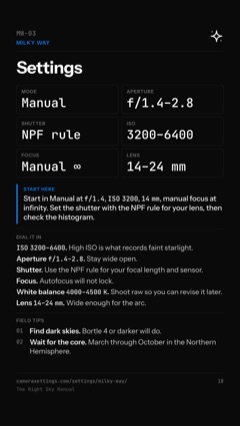
View on AmazonCamera Settings by Target
Optimal settings for different astrophotography subjects
Milky Way (Wide Field)
Star Trails
Deep Sky (Tracked)
Meteor Showers
Moon (Detail)
Northern Lights
Planets
Lunar Eclipse
Night Sky Cheat Sheet
Quick reference for the field