
Blue Hour
Morning
—
to
—
—
Photography Planning Tool
Plan your shoots around the best natural light. Precise times for golden hour, blue hour, sunrise, and sunset based on your location. Golden hour camera settings
Loading...
Interactive sun position throughout the day
Sunrise, sunset, and daylight length for the next seven days. Planning further out? See the full sunrise and sunset calendar.
Optimal camera positioning for different times of day
Face: East to Southeast
Subject placement: Light source behind you for front-lit subjects, or position subject between you and sun for backlit silhouettes and rim lighting.
Best for: Warm, soft portraits; landscapes with long shadows; architectural details.
Face: North (in Northern Hemisphere) for open shade
Subject placement: Move into shade or use diffusers. Overhead sun creates unflattering shadows on faces.
Best for: Abstract shadows, minimalist architecture, underwater photography, or use fill flash for portraits.
Face: West to Southwest
Subject placement: Same as morning golden hour. Evening light often has warmer, redder tones.
Best for: Dramatic landscapes, portraits with warm skin tones, cityscapes as lights turn on.
Face: Any direction — ambient light is even and diffused
Subject placement: City lights, water reflections, and artificial lighting become key subjects. Use tripod.
Best for: Cityscapes with twilight sky, neon signs, light trails, long exposures.
Always have the settings you need with you. Print it, or set the phone card as your lock screen before you head out.
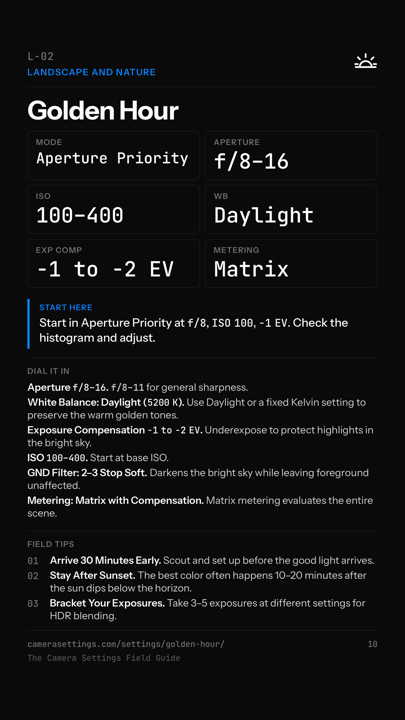
Starting settings for golden hour and 35 other scenarios, plus 8 planning tables. One download: a print deck, a phone deck, and lock-screen cards.
Recommended settings for each lighting condition. Full golden hour camera settings guide · Blue hour settings
Most landscape compositions live at 16–35mm.
See mount picksA CPL is the one filter that still cannot be faked in post: it cuts glare on water and leaves, and deepens a blue sky at 90° to the sun.
View on AmazonBlue hour, fog, and any shutter slower than 1/15s need a locked-down camera.
View on Amazon