
Diagnose Your Blur
Pick the blur type that matches your photo; the comparison updates instantly
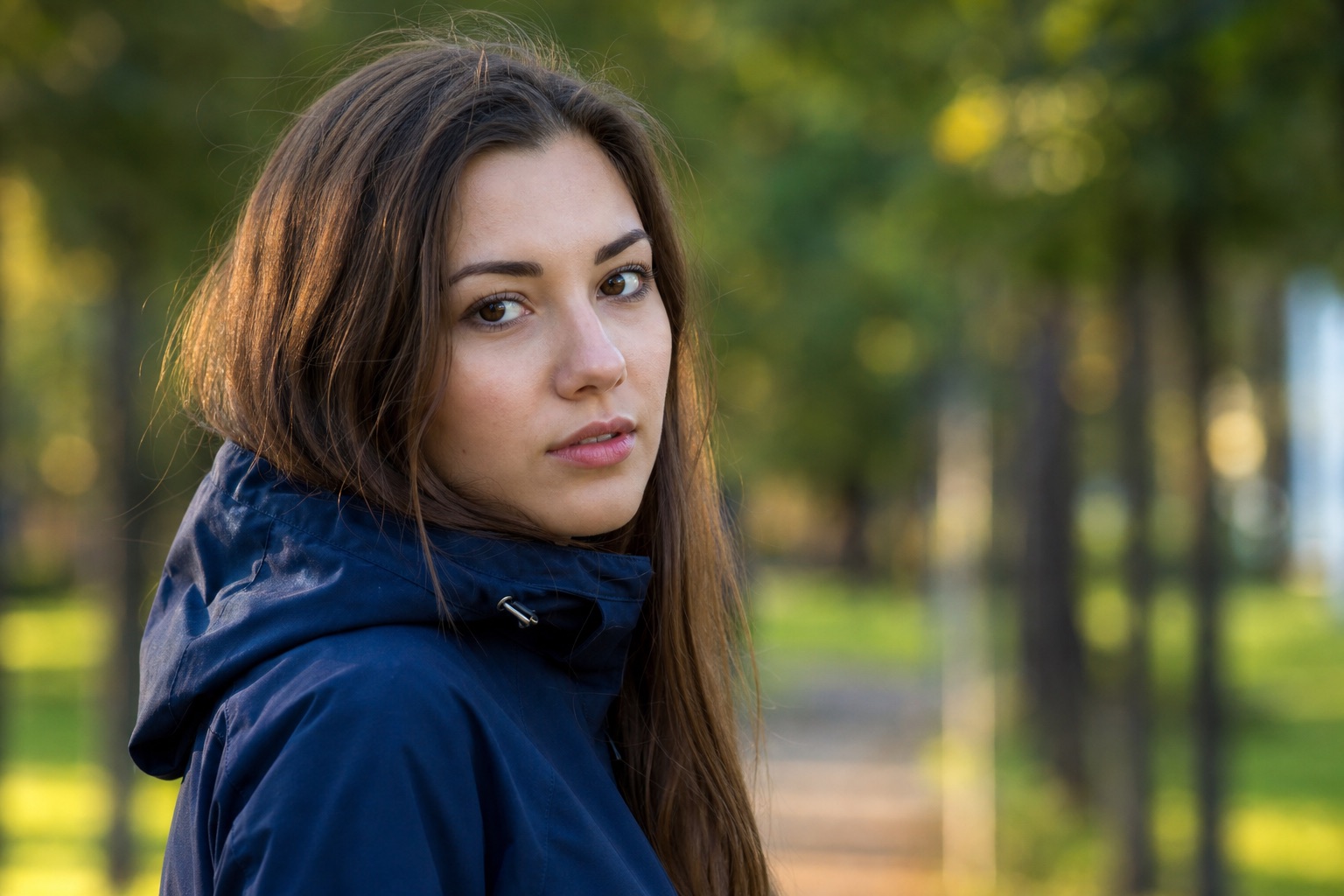
Motion blur from 1/15s shutter, fixed at 1/500s with AF-C
Motion Blur
Subject or camera moved during the exposure
-
Raise shutter speed
Walking: 1/250s. Running: 1/1000s. Sports/wildlife: 1/2000s+. Switch to Shutter Priority (S/Tv) and let ISO float.
Mode: S/Tv 1/500s+ Auto ISO -
Switch to continuous autofocus
AF-C (Nikon: AF-C, Canon: AI Servo, Sony: AF-C) tracks moving subjects between frames. Pair with zone or wide-area tracking.
AF-C Zone AF High burst -
Anticipate the peak action
Pre-focus on where the subject will be. Shoot in bursts; one frame in ten will be sharp at the decisive moment.
Missed Focus
Autofocus locked on the wrong plane
-
Use single-point AF on the eye
Place the AF point on the nearest eye. Single AF (AF-S / One Shot) locks focus. Half-press, recompose only slightly, then shoot.
AF-S Single point Eye AF -
Stop down for focus margin
At f/1.4 on a close portrait, a few centimeters separates sharp from soft. f/2.8–f/4 buys enough depth to cover focus error.
f/2.8–f/5.6 DOF calculator -
Check your AF area mode
Auto-area AF often picks the closest high-contrast object (a shoulder, hair, or background), not the face. Shrink the AF area.
Camera Shake
Shutter too slow for your focal length or technique
-
Apply the reciprocal rule
Minimum shutter = 1 ÷ focal length. A 200mm lens needs at least 1/200s handheld. Use the calculator below.
-
Enable image stabilization
Modern IS/VR/OSS buys 3–4 stops. A 70–200mm at 1/30s becomes viable, but IS does not freeze subject motion.
IS/VR on 1/(focal÷8) -
Stabilize your grip or use a tripod
Tuck elbows, exhale before pressing the shutter, or brace against a wall. Below 1/30s, a tripod is the only reliable fix.
Minimum handheld shutter speed
Your focal length sets the slowest shutter you can safely handhold. Enter it to see the limit.
Blur Fix Cheat Sheet
One-line fixes for the field
Common Questions
Quick answers on blur causes, shutter speed, and AI sharpening.
Why are my photos blurry?
Photos blur for three main reasons: motion blur (subject moved during exposure), missed autofocus, or camera shake from a shutter speed too slow for your focal length.
What shutter speed stops motion blur?
For handheld shots, use the reciprocal rule: shutter speed at least 1/focal length (e.g. 1/200s for a 200mm lens). For moving subjects, use 1/500s for walking pace, 1/1000s for running, and 1/2000s+ for sports and wildlife.
Can AI fix a blurry photo?
AI sharpening tools can improve mild softness but cannot recover detail lost to severe motion blur or gross focus misses. Fix the cause in-camera (correct shutter speed, AF mode, and aperture) rather than relying on post-processing.
Keep Learning
The settings behind every sharp shot